Web Design Trends 2026: What Actually Matters Now
Published by John Oruebi Eniekpo in Full-Stack Web Development
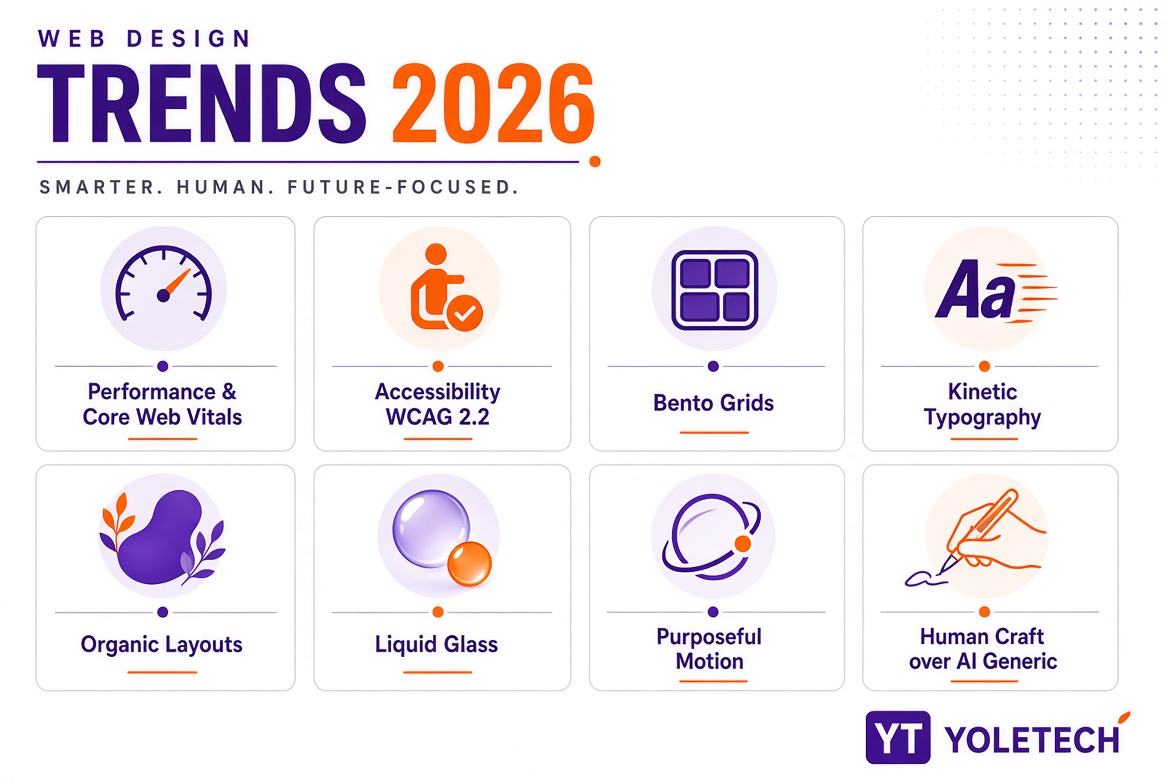
AI personalization and adaptive interfaces are real for high-intent products, but they require careful implementation to avoid cache and performance issues. AI website builders and “vibe coding” accelerate early versions, yet most production work still needs human refinement.
**Web Design Trends 2026: What Actually Matters Now**
Web design in late 2026 is defined by two forces: relentless performance and accessibility requirements, and a visual push toward more human, expressive, and purposeful experiences. Generic AI aesthetics are already facing pushback. Sites that win combine speed, clarity, and intentional craft.
Performance and Accessibility Are Non-Negotiable
Core Web Vitals remain the baseline. Slow sites lose both users and rankings. Accessibility has moved from best practice to legal requirement in major markets (WCAG 2.2 and the EU Accessibility Act). Mobile-first is no longer a choice—most traffic is mobile, and thumb-friendly layouts are expected. These foundations affect every other trend.
Visual Systems: Structure Meets Expression
**Bento grids** have become a standard for feature sections and portfolios. Modular, card-based layouts scale well and feel modern without complexity.
**Kinetic typography** treats text as a primary design element. Variable fonts and subtle motion on headlines create hierarchy and personality while remaining readable.
**Organic and anti-grid layouts** are rising as a reaction to rigid templates. Soft shapes, irregular spacing, and natural flows give sites a more crafted feel.
**Liquid Glass and refined glassmorphism** appear as control layers and accent panels rather than full-page effects. Used carefully, they add depth; overused, they hurt contrast and performance.
**Bold color palettes** (often called dopamine colors) and intentional dark mode are common. High-contrast accents work better than full-screen saturation. Dark mode is now a system preference, not a toggle novelty.
Motion That Serves the User
Native browser capabilities have matured. Scroll-driven animations and view transitions can now be implemented with CSS, reducing reliance on heavy JavaScript libraries. Motion is expected but must be purposeful—guiding attention, providing feedback, or supporting storytelling. Always respect `prefers-reduced-motion`.